Thursday, 18 August 2016

Lessons on problem solving and culture change in pharmaceutical manufacturing: Straight from an unassuming village in Assam, India

This Assam Mechanic Made A 'Jugaad' Helicopter Using SUV Engines & Car Seats! Chandra Siwakoti Sharma recently built a jugaad helicopter using car seats and two SUV engines and guess what he named it? “Pawan Putra!” An automobile mechanic by profession, Sharma spent over rupees 15 lakhs from his own savings to design the unique invention. A resident of Shyamjuli village in Assam, Sharma dropped out of school after third grade due to poor financial conditions. But determination drove the man like no other. He used all his savings and even sold his land to build his Pawan Putra, an invention that's awaiting clearance from authorities.” February, 2016; Indiatimes.

This was an inspiring piece of news! It made us wonder, of somebody, who could innovate under such dire circumstances. What is amazing about the article is that Mr. Sharma, invented this, “Jugaad” helicopter to address poor transportation conditions at his village! This is a game changer... from, “no roads” to, “no need of roads!”

Working with the biological and pharmaceutical manufacturing industry, we have come across, some of the most wonderful organizations, where innovation is nurtured and encouraged. However, we have not seen many Chandra Siwakoti Sharmas’ at our shop-floor.

We have been some part of several culture change Initiatives, in the pharmaceutical and biological manufacturing organizations, and have seen our share of successes and failures, in the spaces that we have worked. When we look back and ponder on The Most Important Factor for a successful cultural transformation in the organizations, we could not come up with anything else but “the innovative implementation” of a very obvious solution to a herculean, or seeming herculean problem.

Inspired from Mr. Sharma’s tryst with, “no roads” to, “no need of roads” we decided to catalogue our experiences of critical pre-conditions, those need to be present or are required to be developed before a cultural transformation takes place!

While doing so we have taken a case of two similar sized multi-locational pharmaceutical organizations, and who had more or less the same aspirations of cultural transformation. Our time and nature of involvement with both the organizations was also very similar, approximately lasting four months. The work done at both the organizations was more than five years back and thus gives us benefit of assessing the outcome fairly. Needless to say, one organization is a phenomenal success today and other is still, “work in progress”.

We are bound by the confidentiality agreements with both the organizations, and hence will not delve more into the type of work we did with them and the nature and extent of the problem. However, for understanding of the reader of this article, the nature of the problem was, “workforce need to adhere to the standard procedures” or standardization of work processes at shop-floor. For our easy understanding we will name these organizations as “Success” and “work in progress”.

To provide more perspective, both organizations were able to achieve work process standardization at the location/operation, which they were targeting. However, the “success” organization was not only able to transfer the knowledge to other locations, without involving external help, but also was able to improve, on the initial work which was done, to make their processes robust and compliant.

The “work in progress” organization, although were able to achieve their targets then, but were unable to cascade the learning, either from one operation to other similar operations or take the learning into other locations. No further improvements were undertaken by this organization on the work processes. Therefore, it required and still requires constant support to solve similar problems at other locations.

After reading the article on “Jugaad helicopter”, a review of the progress at both the organizations saw the authors spending two months, at the shop-floors of the original manufacturing locations. There were multiple interviews of the shop-floor personnel, managers and senior leadership, across both the organizations. The groups were divided into the following:

1.0  Those who were part of original four-month initiative, a total of 80 shop-floor personnel, 12 managers and 4 leaders.
2.0  Those who joined later in the same department, where original initiative was conducted. A total of 43 shop-floor personnel, 2 managers.
3.0  Other personnel and managers from other departments or locations. A total of 657 shop-floor personnel and 20 managers.

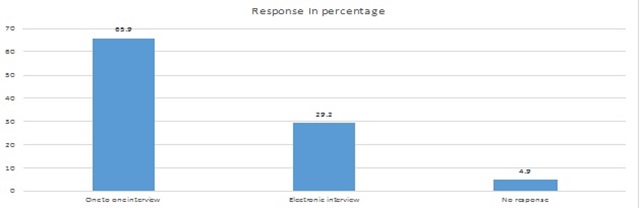
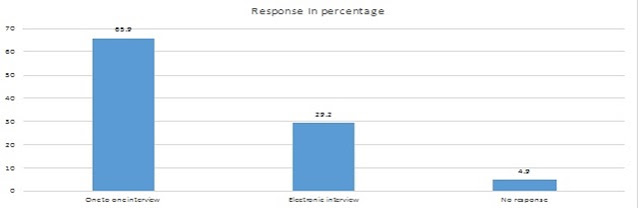
The study also accounted for the attrition in both the organizations; efforts were made to trace and interview the ex-employees; details are depicted in the graph below:


In the following section of this article, we will list and analyze the aspects, those which triggered or hampered, “innovative implementation” at these two organization.

Organization culture, which is conducive of innovation, is characterized with its ability to transform ideas quickly into experiments. These experiments can result in data, which is used for decision making for future change, implemented successfully. This can be divided into following stages:

1.0  Understanding the problem: Significant effort is made to understand the problem/opportunity, before taking next steps, instead of, “knee jerk” action.
2.0  Trust: People are able to experiment with ideas, without fear of backlash.
3.0  Zeal/ Inspiring curiosity:  Focus is on What, Why and How, instead of “who”
4.0  Challenge current perspective and not averse to Risk: Processes and perception are put to scientific enquiry, instead of a general attitude of “not rocking the boat”.
5.0  Skill development by fostering partnership: Give and take is deep rooted and employees understand with every, “give” to someone, they are, “taking” a lot of experience.
6.0  Creating freedom and open dialogue: Employees/teams do not wait for right opportunity to speak on issues, rather anyone can discuss their issues, and seek solutions across the length and breadth of the organization.
7.0  Driving discipline/ criticism: Teams/Employees/managers do not feel offended, when feedback is provided, instead seek constructive criticism regularly.

We designed an experiment, to understand the underlying causes of transformation/ or lack of it in both the organizations. Through using tools, the data that emerged is represented below:

As depicted in the graph, the participant from, “success organization” gave higher ratings than, “Work in Progress organization”. This leads to quick implementation of learning, taken by one section/department to the entire organization. The higher ratings in one organization, do indicate a relation between their success and their culture of sustaining “innovative implementation”, when we compare it with the other organization.

However, this brings us to next question, how was one organization able to have all parameters ticked in for sustaining this learnt innovation despite the overall experience, the sizes, scale and challenges of both organizations being similar? We will discuss in the subsequent part of this article….In the meanwhile, if you wish to reach us, please do so at vienni.india@gmail.com.

Contributed by Vishal Sharma

Wednesday, 16 December 2015

Capacity building: Can we translate rhetoric into a pharmaceutical infrastructure that will last?


Being a part of the industry, we come across various news articles on industry, and one such article which caught my attention, was titled,“ Beware of ‘Made in India’ medicine”  published in The Hindu Business Line, on August 12, 2015. The author had opined on the current status of the Indian pharmaceutical organizations, while article was not representing the facts completely, it did trigger the curiosity to understand, what are the threats we have as an industry, and what we need to do to mitigate them.

Most of my colleagues, who are either regulators or are working with the industry, are unanimous on one such threat, of supply chain continuity. This sounded a little surprising to me. As the industry exists to provide affordable and quality medicine and regulators are more than happy to allow more players into the market to bring quality medicines into the patient reach. Quality and affordability are a motto for both sides. Patient safety is “the priority” for all, regulators and industry. The number of plants and their capacities are increasing, spending on R&D(1) has increased, and number of people joining the pharma industry has gone multifold. Then where is the threat to “supply chain continuity”.
Apparently most, were worried about, regulatory action, which stems out of deficiency in the quality management system, that makes a site or facility, incapable of supplying medicines into the market, till remediation is completed and is verified by regulatory agency(ies). This process when kicks in takes a lot of effort and time from both the sides, till the process is brought on to the track and the trust is re-established, through all protocols being followed. 

Going deeper, one realizes that this stopping of a site to supply medicines, by a regulatory agency, should not have happened at first place, because, patient safety and quality are the two wheels on which the industry rides. Secondly, no organization would want to deliberately create a situation, which will call for such a harsh regulatory action, one which will prevent them from providing medicines into the market. Regulators on the other hand are working assiduously to safeguard patient interest. They will not be happy to stop supply of a medicine, if they find it to be safe, efficacious and meeting the quality standards. Most of the recent, “import alerts” or “regulatory actions” seen by Indian industry comes from deficient or unsustainable quality management systems.
So why are we finding it difficult to sustain “quality”. One clue is in the attrition rate of employees in the pharmaceutical sector. If one looks at the attrition rate in the pharmaceutical industry, it is 30 to 40 percent at the bottom of the pyramid (2). This bottom consists of people who are at the R&D bench, running experiments, or at shop-floor, manufacturing these medicines, or in the field, selling them. 

While manufacturing plants have increased capacity to produce more drugs, the manufacturing processes are becoming complex, and sourcing of materials to manufacture drugs has gone global. All this and high attrition at shop-floor, has increased pressure on “quality manufacturing”. The organization is stretched at the core to produce drugs, and at the same time is struggling to keep the required positions filled. Thus, we hear a high performing organization, suddenly is in the news for all the wrong reasons. 

Taking its toll on the capability building of the personnel, who are manning operations. The current learning and development departments are still operating under traditional concepts of class room trainings or “read and learn”, collectively called as “apprenticeship model”. This model coupled with high attrition at the bottom, besides the increased complexity of manufacturing operations, is totally out of the sync with the current realities. These classical approaches of capacity building need a lot of time and effort to produce a slow and difficult to evaluate improvements; whereas, the need of the hour is to have a paradigm shift in our technical training methodologies.

Let us take a classical example, where a trainee is trained on a standard operating procedure (SOP). The apprenticeship model of training process which is currently followed in the pharmaceutical industry is described in the following chart:


The success of this SOP training is dependent on following factors:
1.      Complexity/simplicity of the task
2.      Learning ability of the trainee
3.      Resources available to learn  
4.      Availability and time of “trained” personnel
5.      Availability of infrastructure to teach
6.      Time and its quality spent on teaching
This classical apprenticeship (class room training) model, though is rigorous, but on an average takes several weeks to months, for an apprentice to complete the training. The expansion of manufacturing capacity, has led to increased requirement of trained manpower. Ironically, the current trained manpower is stretched not only to complete the increased manufacturing activities, but also is expected to train and qualify new operators and analysts. Over and above a high attrition of these trained operators and analysts has left this model completely ineffective.Therefore the current challenge, that the industry faces, has to rethink and strategize, on how we train and qualify our personnel, to match pace with the growth.

21 CFR 211. 25, USFDA states, “Each person engaged in the manufacture, processing, packing, or holding of a drug product shall have education, training, and experience, or any combination thereof, to enable that person to perform the assigned functions.”   (Highlight is done by author)
The focus of apprenticeship model is on education, training and experience, which are very crucial for sustained quality manufacturing and operations. However no consideration is given on the “assigned functions”. These functions are taken “as is” and no thought is given on rationalizing these functions, with current manpower and their competence.

Rationalization of function:
Delving into history, the answer was discovered by Henry Ford, around a hundred years back, where he quotes, I have heard it said, in fact, I believe it's quite a current thought, that we have taken skill out of work. We have not. We have put a higher skill into planning, management, and tool building, and the results of that skill are enjoyed by the man who is not skilled." In-line to what Ford said, we cannot reduce the expectation of reaching bigger markets with quality standards and lower costs. In-fact, that will be counter intuitive to innovation and development. We also need to be prepared to face the current challenges and realities, of a people turn-over due to the exploding employment opportunities.

What we need is to invest in:
1.      Designing our processes; for example if we consider explaining this, using a simple process of data collection or documentation, which needs to be designed for manufacturing or testing functions. The key questions, that seek answers are:
a.      Do we have the right people, who understand what critical data is?
b.      Do the people have information on what needs to be collected?
c.       Do they know how it will be collected in real life situations?
d.      Do they know who will collect this data, and what are the realities at the shop-floor?
e.      Do they know why it is important to collect a specific data and what may go wrong?
If we have, a “Yes” as an answer to all the above questions, we have our dream team, which can design the documentation process. If not, we need to invest in capacity building of this team, before launching on any documentation process, which will be handed off to the manufacturing or testing department.

2.      Understanding the functions, we expect people to perform; while drug manufacturing process is designed by Scientists who are better read than the people, who actually manufacture the drug, the information cascade does not always take this difference into consideration. Therefore what appears obvious to many may not be obvious to people, who are at the doing domain. The key questions, that seek answers are:
a.      How is the current man-power (with all its turn-over etc.) going to handle the documentation process, besides being involved with the manufacturing function?
b.      Are the documentation processes easy enough for every doer, (with little or no telling/teaching) to be completing the data collection activity accurately every time?
Remember Ford, when he saidI'm going to democratize the automobile, when I'm through, everybody will be able to afford one, and about everybody will have one." This thought changed the way automobiles were manufactured before Ford(3). Ford inaugurated the era of “mass production” and the car was transformed from a luxury item to a necessity.  What is required in today’s pharmaceutical industry is to do a Henry Ford for our Human resource capability building processes.

3.       Process Management Tools for today and tomorrow: Quoting one of Ford's maxims: "Everything can always be done better than it is being done." The key questions, that seek answers are:
a.      Are our tools (formats, documentation controls) for documentation processes apt for the current requirements and for the foreseeable future?
b.      Have we challenged our documentation processes to fail?
c.       Are there better and simpler tools, which can be applied?
The classical apprenticeship approach focuses on telling operators and analysts about ideal processes (documentation process, as we took the example), which is both cumbersome and perhaps time consuming, while the radical thinking approach focuses on the real life processes and how these processes will integrate in the current infrastructure and in parallel build people capability. This in the experience of the author has provided exponential results.
Today, the Indian pharmaceutical organizations are at the same cross-roads, where Henry Ford was a hundred year ago. The path we choose to tread on today, will take us to the next level, of creating a human infrastructure that will cradle the physical infrastructure for the next hundred years and beyond. Henry Ford’s concepts are testimonial to this.
Contributed by Vishal Sharma

Monday, 17 August 2015

What Today’s Indian Drug manufacturing companies can learn from Antiquity: Lessons from Indian History on “Culture of Quality”

Various places, various platforms, various teams… one discussion, Culture of Quality, or Quality Culture, or was it culture of compliance, or compliance culture, or wait was it good old cGMP…. I am thoroughly confused.

If one searches for “organizational culture” on Wikipedia, this is what appears on the top of the article, “organizational culture encompasses values and behaviors that contribute to the unique social and psychological environment of an organization." According to Needle (2004), organizational culture represents the collective values, beliefs and principles of organizational members and is a product of such factors as history, product, market, technology, and strategy, type of employees, management style, and national culture.”

Quality is one of the fundamental premises on which today’s pharmaceutical industry is operating and excellence is measured with continuous improvement in quality of therapeutic products, supply chain management, testing methods, manufacturing operations etc. Therefore it is pertinent for the pharmaceutical organizations to continuously pursue “culture of quality”. Some of the indicators, which can be utilized for evaluation of organizational culture of quality, are as listed below:


And finally, how does all of this get documented! And how is culture of quality pursued in this documentation?

                                                                                                                       Contributed By
                                                                                                                          Vishal Sharma

Tuesday, 11 August 2015

TRUST : A NEW AGE BUSINESS PERSPECTIVE

When asked whether he trusts his wife, Adarsh replied with a shrug of indifference, “It depends”. But intent on getting a definitive answer, Som persisted by telling him that it has to be a ‘yes or no’.  To which Adarsh said, “Trust cannot be absolute”.  When asked further as to what he meant, Adarsh elaborated that there are areas where he would trust her and areas where he won’t.   Seeing the perplexed look on Som’s face, Adarsh pre-empted any further queries by hastily adding, “I would trust her as a cook but not as a driver.  So you see, Som, it is not absolute, it’s contextual.  Let’s be practical”

Coming closer to workplace, isn’t that what we need to consider for building trust? Increasing mobility, faster job rotations and increasing competitiveness are redefining our interpretation of trust now.  Culture building has taken a back seat while value-for-money in human asset takes precedence in our haste to meet business objectives.  Under these circumstances, it is common to hear leaders harping on lack of trust, need to build trust and how to build trust.  It is another thing that even Socrates lamented more than 2000 years back that the youth could not be trusted as they are given to vices.  Still, ‘building trust’ is emerging as one of the topmost people’s development needs nowadays.    And, there are a dozen training solutions providers who are offering to help organizations build trust.  But, fundamentally aren’t they missing few key points in a fast paced world that's redefining values: trust is ‘contextual’; not ‘absolute’, trust needs ‘worthiness’; not ‘conferment’,  and trust must be ‘offered’; not ‘demanded’?

Businesses may do well by understanding the nuances of trust building as more and more employees come under pressure to deliver and chase ways to find work-life balance. With employees joining from all walks of life & varied backgrounds and with pressures on containing the attrition rates, how can business leaders go about building an environment of trust which is very ‘business centric’ and effective?  Gone are those days when someone was expected to be trustworthy at all times in all areas.  Today technology has enabled us to ‘police’ people, irrespective of their background, in areas of vigilance and compliance.  So, how do we adapt to the change.  Let’s then focus on the morphed dimensions of trust as they exist today:

Trust is not absolute; treat it skill based:  Trusting people for the skills which matter most for business impact & objectives.  Let’s say, trusting a security supervisor for securing our workplace.
Build expertise to build trust:  Trusting employees for the expertise that they exhibit through their behaviours.  Say, a security supervisor primed to deal with emerging threats better than the criminals inspires trust.

Consistency builds trust:  Integrity & transparency in respective areas of work would work wonders for building trust.   Say, a security supervisor who refuses to accept favours from visitors at all times will build trust in his work domain & elsewhere.

Dependability builds trust:  Acknowledging an experience of dependability with an employee (for the job that he performs) can help build trust.  Say, a security supervisor successfully foiling an intrusion attempt each and every time it happens would help build trust.
                                                                                       Contributed By Mahesh Sharma

Wednesday, 6 May 2015

You have attended the workshop….how do you retain what you learnt?

I attended recently along with 20 other motivated participants, the HBoS Workshop, conducted by ViennI in Hyderabad. For a non-technical person like me, the dosage of technical, regulatory and scientific input was very high indeed. I struggled to understand and I found myself struggling to retain what I learnt. Got me to think about trying to find a scientific way to retain what I learnt. A bit of reading, browsing and research and I have a XX point formula. And here it is :
1. Use multiple tools - Learn in multiple ways.

  • The lecture and the presentations; so my audio and video tools were done. 
  • Next was “talk”, so I tried explaining what I  learned to a friend.
  • “Writing” ;notes and drawing a mind map. Freemind, a mind mapping tool for free!

2. Teach – Transfer the Learning

  • One of the best ways to learn something is to teach it to someone else
  •         Teaching solidifies new knowledge in your brain.
  •         Share the learning, write a blog. You are all welcome to contribute here on this site !

3. Use Previous Learning - Promote New Learning

  • Use relational learning; relate information you have to things that you already know.
  • Gather all other relevant information.

4. Practical Experience

  • Actually putting new knowledge into practice is the best way to improve learning.
  • Perform the activity and use the new knowledge on a regular basis

5. Get a Cheatsheet- Look Up Answers

  • Forgotten the details? Go back to the text, the notes or google! 
  • You are always better off simply looking up the correct answer
  • Or simpler still call us, email us or post a query on this blog!

6. Test yourself

  • Taking tests and quizzes actually helps you better remember what you've learned
  • It will give you better long-term recall of the materials
  • Mail us if you want a quiz !


This is what works for me, do you have any additional tips? Mail us or post your ideas here!

Thursday, 2 April 2015

Aseptic Practices and the Myth in the Industry

Manufacturers of sterile pharmaceutical products use aseptic processing for the formulation of liquids, lyophilized products, FFS, Ophthalmic solutions, PFS products etc. Aseptic processes are the preferred route for the manufacture of products that cannot be processed by terminal sterilization.
Aseptic processing systems are constantly evolving. Controlling and maintaining viable and         non-viable particles in the aseptic areas and surrounding environment is a challenge.  There are still multiple grey areas with respect to activities performed during media fills.

A few of the lesser understood aspects are:
  •        Hand sanitization : Frequency, methods
  •     Changing of gloves : Frequency, methods
  •     Conversations/discussions in the areas
  •     Sanitization issues
  •     Garments/ attire during media fills
  •     Sampling during interventions
  •     Personnel issues: Qualification, Training
  •     Metrics for success and monitoring of the processes
  •     Electronic surveillance, Access systems: Dos and Donts

People, their attitudes, knowledge, participation and involvement are key to regulatory success. Regulatory failure is a result of an issue with one of these keys. This is revealed by citations in regulatory warning letters. Regulators usually recommend retraining and re-qualification of the personnel on Aseptic practices and on compliant behavior.

Experts can help in devising and in effective implementation of QMS at sterile manufacturing sites. At Vi’eNnI Training and consulting, we are intensively involved in training and development, aimed at improvising, personnel practices, behavior and the attitude towards day today activities. We offer a comprehensive 360⁰solution.


Our workshop “Heartbeats of™ Media fill” in the month of May 2015 in Indore can be a great training/learning experience! 

Friday, 27 February 2015

Training

Education makes a person , but what use of education if it is not put to use. To make that “put to use” one needs to know “how”. Training is a means to achieve the knowhow of HOW!! Today I want to throw light on top 10 reasons why technical, regulatory trainings are best when outsourced to external organizations rather than handled internally

10.  Training Tools – Organizations whose core operations involve training, invest in tools that are real worthy and useful. They  train their trainers in the technical stuff as well as in training and evaluation methodologies. After all a tool cannot replace a human being.

9.  You are good at your “ Core Business” – Any pharma company would consider, training a necessity. Content development, learning systems, management and course delivery are strengths of a dedicated training organization. It is the training organization’s “ Core Business” as much as you excel at your core competencies the training organizer to excel in their core area.

8. Making learning real & relevant -  If your training methodologies, content and structure, delivery mechanisms and processes ought to be real. A lot of case studies, live cases at your site, can be a source of learning.

7. Authentication Requirement – Training helps you successfully navigate through regulatory requirements. Quite often it is necessary to produce training certificates and in some cases essential to prove that you and your team were trained by a trained or certified trainer. When an external training organization does this for you, they will issue certificates backed by experienced trainers, who know what training in all about.

6. Imagine the resources – If you were to plan on handling training ONLY with internal resources, imagine the number of trainers, the levels of knowledge and the time consumed. Training is an intermittent activity that needs FULL dedication for a short period of time. Running the TTT( Train The Trainer) sessions for a select few from your organization can empower some folks to handle training at short notice.

5. Leverage High Level Relationships – Every company has some extra time that can be used to share good practices. It may be a good idea to source the delivery of your training to these people. Sourcing training through partners who can ensure that the best in the business are identified for continued training of your work force, is where a legacy continuity of learning is established.

4. Speed – Getting ready for an audit, for production or for validation or installation may be dependent on getting your team trained right away. Using an external training partner will allow you to get you up and running at a great speed.

3. Wherever – If you have plants in 3 different places in the country and want a uniform, training operation across different sites, then an external partner will ensure that this happens. Internal resources at each of these 3 places will increase the burden on cost and will hamper the consistency of training.

2. Knowledge - No single pharma company has all the knowledge they need internally to be able to train their personnel in every domain. An external partner will either have most of the knowledge or leverage their own resources to ensure that a comprehensive training package is delivered at your site.

1. Cost - The primary reason why companies must outsource training is to save money. It is always about the cost savings and bottomline. In the long run it will be a cost-saver for your company and aid in preventative techniques than in adopting to therapy when diagnosed with chronic illness.

The mantra here stays true. Prevention is better than cure !

Monday, 2 February 2015

On Boarding


     Research and conventional wisdom both suggest that employees get about 90 days to prove themselves in a new job. Every organization has its own version of the complex process through which new hires learn attitudes, knowledge, skills and behaviors required to function effectively.  The bottom line is that the faster new hires feel welcome and prepared for their jobs, the faster they will be able to successfully contribute to the firm’s mission.

     On boarding has four distinct levels, the Four C’s. There are multiple aspects of on-boarding, some that are handled best by the internal teams such as finance, legal and HR and then there are some aspects which are best out-sourced to an outside expert. The aspects that may be out-sourced are highlighted in RED.The four C’s are :

1.       Compliance is the first level of assimilation and this means teaching employees the basics. In a pharma environment the following may be covered.
        Company’s legal and policy-related rules and regulations
        Employee code of conduct, work-place ethics
        GxP, Lab basics, Record keeping, Aseptic handling, Safety (EHS)
        Regulatory aspects of manufacturing, QA, QC and reporting

2.       Clarification refers to ensuring that employees understand their new jobs and all related expectations
        KRAs, Assessment, Appraisals
        Feedback, Coaching, Mentoring
        Technical expertise, tools ( Sterilization, Aseptic  methods, Statistics)
        Testing, validation, inspections and instrumentation

3.       Culture is a broad category that includes providing employees with a sense of organizational norms— both formal and informal
        Company vision, mission, goals
        Company ethics, culture
        Culture of Quality
        Global /Pharmaceutical Industry norms and culture

4.       Connection refers to the vital interpersonal relationships and information networks that new employees must establish
        High level introductions to leadership
        Team bonding/building
        Connections with suppliers, consultants and knowledge keepers
        Digital connect, web based tools, knowledge bases and forums

   Connect with us at vienni.india@gmail.com or Call on 080-23506862 to evolve complete on-boarding solutions. We have successfully executed multiple collaborative projects with manufacturing, QA, QC and HR  teams across multiple top pharma companies. Together we can create world class teams !

Friday, 30 January 2015

Significance of D-value for establishing hold time for TS-products

Sterilization is key to keeping products, items, articles free of known contamination. One could choose different modes of sterilization such as moist heat, dry heat, ethylene oxide, gamma irradiation, filtration etc. The use of moist heat is the most preferred method in the pharmaceutical manufacturing domains.
Terminal Sterilization (TS) is the process that involves moist heat sterilization of filled and sealed products like vials, ampoules, bottles, bags etc. The sterile hold duration setting for TS products is one of the most critical tasks in the process.  Container size and the fill volume are the key attributes to be considered. A D-value determination (define D-value) helps in the fixing the sterile hold duration of the products. Sufficient care must be built into the design of the experiments to ensure that increase or decrease in the hold time does not affect the quality attributes of the terminally sterilized product.
During the design and development of TS-cycle where the customer had qualified the cycle by coupling a physical and biological approach, evaluating the product attributes post the heat exposure phase depicted an increased impurity level. An investigation of this problem revealed two aspects,
1.      Cycle designed was based on an over-kill approach
2.      D-value used was 2.5 minutes
We brought the VieNnI’s sterilization expertise and experience to the table. Our work and analysis quickly addressed the situation and the solution was framed.
1.      We suggested that an over-kill approach was the least suitable for TS products.
2.      We brought clarity to the process with explanations of the theory and practice of TS.
3.      D-value determination of the TS-product was performed subsequently which was to the customer’s satisfaction.
4.      Regulatory compliance was ensured. Adequate justification, to revise the process including the cycle and validation, development time and cost was made and checked.
We successfully helped the team in meeting quality acceptance criteria of the product and its specifications.

If your sterilization process needs help, if your validation team needs clarity, and if you want your manufacturing operations to be unhindered by these issues, experts from Vienni are just a call away at 91 80 23506562 or email us at vienni.india@gmail.com. Let us design and develop sterilization process and related solutions for you.

Tuesday, 16 December 2014

Our proposition : Information

Information is a valuable asset and critical to every process. Information management, planning and availability are dependent on technology, processes and people. Informed decisions are made by people with data, people who understand data and mine the data for specific information that drives action and increases speed!
Incremental pieces of data exist with individuals and departments within organisations. Sometimes external information regarding equipment, technology and regulatory updates is not percolated through the organization. ViennI works with teams within the organization and brings in external information to get to the solution. We routinely adviseorganizations on how to effectively use their information to advance decision-making, improve operational efficiency and deliver outcomes. We engage with stakeholders, identify requirements and provide genuine answers to real problems.
We assist clients by managing the complete process life cycle from needs analysis and requirements to evaluation, integration and deployment. This process is highly information driven.

Quite often pharma production units, companies, approach ViennI for help with their processes. In many cases, the QA, QC and lab and production teams are doing “routine” functions. Yet, the regulatory requirements are not met, there are sterility issues and the situation quickly becomes un-resolvable. The execution of a solution in such cases is always starts with an extensive exercise in data analysis, mining for useful information.This information is cross checked with industry standards and regulatory expectations and LO AND BEHOLD………we see results!

ViennI uses “Information”  as an asset to advance your cause. Get in touch at vienni.india@gmail.com

Sunday, 19 October 2014

The A , The B , The C , The D and The E of a successful workshop

Training programs often give participants a better understanding of why the "Topic of Training" is essential in the work environment. Most often you leave feeling more knowledgeable, buoyed and hopeful for the future, but when you return to your desk, you will often find that you are back to square one. Too often training inspires and captivates, but it doesn't teach micro-behavioral skills that are fundamental to achieving real transformation

We work in a world where organizations operate as networks of projects and teams work across a matrix as opposed to a hierarchy. In the realities of today’s production, QC and QA environments, everyone will have to lead from the front, take ownership and for that they must have tools necessary to start.

That's why QA, QC, Sterilization training should zero in on specific micro-behavioral skills people will need to work across silos and with teams. It needs to provide tools participants can use to make decisions, solve problems, avoid issues and achieve regulatory success. Only when knowledge, operations, attitudes and skills are broken down to a series of micro skills will training be able to be aligned with the organizational objectives.

Here are five essential elements that should help one hone in on the right training program for the organization:

Applications -> Applicability ->Adaption:
We all learn the science/technology in college; We all know what the applications are. It takes a workshop like the HBOS to actually experience the “Eureka” moment! The moment where you relearn the application and instantly realize that it can be directly be applied at site of work. The sharing of experiences and the best practices in addition encourages and ensures adaption. A book, a website, a document and a seminar will only give us the applications. A truly well designed workshop will give us

Applications -> Applicability -> Adaption and that’s what our participants said!

“ The knowledge gained in this workshop will help in solving routine problems at work in a better         manner.”

“The program was excellent. Learnt about load orientation, QBD,QBR and Data Integrity. Also        learnt new concepts in autoclave. Got better understanding with concepts of D-value, Z value."
                                                                                                             

Benefits, Basics
Perhaps the above point applies only to a few people. For quite a few of us a revisit to the basics is a good idea. Sometimes knowledge is lost in the rigor of routine. Taking time off from our daily rigmarole to re-learn the basics has distinct advantages. Come and participate in a program that strengthens your fundamentals. Revisit the basics with us. Here are a few participants who did and this is what they had to say…..

“Basics were revised again. Data integrity session was really good.”
                                                                                                       
“Very good program. Got basic knowledge of sterilization.”  
                                                                                               

Content, Content, Content
In a 2 or a 3 day workshop, training or learning program, how much can we absorb? Quite a bit at the end of the program, but the retention of this learning is fully dependant on the quality of the content. The stronger the content, greater the retention.  At Vi’eNnI, course/workshop content is developed while respecting this fact. Each slide, case-study, problem, issue is thoroughly evaluated for the richness and utility. Constant updation and improvisation is done on the material. It is also a stark reminder that “Content” indeed is the king! It is our constant endeavour to keep our content, current and relevant. It shows in some of the feedback received like

“Content was good and speakers delivered it well….”
                                                                                
 “Content was really good. …………….All the concerns and all the departments were got together        and different issues of different departments were covered.”
                                                                                                 
Delivery, Delivery, Delivery
In a workshop attended by 30 people, typically we get 5 kinds of criticisms:
1. You spent way too much time on………….
2. Way too little time was spent on….
3. More cases, problems, theory, examples …..
4. I thought this was an advanced course, not a basic course!
5. Some topics were too advanced, can we have some pre-course reading?
Once in a while we see them too and that’s when we get the opportunity to improve on our success.

Engagement
This is the final cog in the wheel. We at Vi’eNnI endeavour to continue to engage with our participants and clients to continuously evolve our programs to make them more specific and targeted. More need based and real
We seek your suggestions and feedback and execute on your requirements. We wish to initiate more conversations on your learning needs and tailor make programs for you. For starters, join the conversation at “ LINKEDIN GROUP” and tell us what you would like to see in our future programs, in terms of content and delivery. Add your comment to the blog here. Or just email us at vienni.india@gmail.com or call us at 080 23506562


Monday, 29 September 2014

We have a keen “EYE” for API’s to be used in Ophthalmic Formulations!

DHS-Cycle design and development using different Biological Indicators

APIs used in the pharmaceutical industry are generally non-sterile. It is however essential to use sterile APIs to manufacture a sterile product.

An ophthalmic parenteral manufacturer intended to use a dry powdered steroidal API in the formulation of a sterile product. This steroidal API had a bio-burden of 100 CFU/gm. Options considered although were plenty, we had to narrow our choice to a sterilization process in a DHS. Heat exposure studies at the labs depicted that temperatures < 115⁰C was safe, while there was a risk of product degradation at temperatures >115⁰C.

Our study began in earnest to design a sterilization cycle with trials, to achieve the desired results. A series of trials and constant monitoring of the temperature profile helped us determine a matrix of parameters for sterilization. Trials were conducted using Bacillus atrophaeus as a biological indicator. The exposed BIs were subjected to microbiological evaluation where maximum of a 3-Log reduction was recorded. The sterility test trials were clearly found to be meeting specification, however the minimum Sterility Assurance Level expected for the process was  6 log  !

Sticky situation indeed! The trials although were meeting the sterility test specs in flying colours yet were falling short of the expectations when it came to log reduction. A thorough investigation of the process and the testing strategy was undertaken. An elaborate analysis and an organised ‘detective ‘work led us to the issue! A repeat of the study subsequent to problem identification provided results, those that were amazing yet expected a 6-log reduction finally! Two more trials were conducted to confirm the physical parameters and microbiological tests and the results were bang on!

A happy customer, a robust process, great experiments and yet another feather in our cap. If your process needs similar intervention, our technical spirits aren't doused yet and we await your ‘call’ to get nose-deep into tricky situations.

Reach us to reach you at 080-23506562 or write to us at vienni.india@gmail.com 

Our Proposiotion : Value

Last week we posted on the 6 vital elements that a consultant brings to the table. It might be worthwhile to explore each in greater detail. The first element discussed was “Value”.

How do you measure the value gained by a consulting engagement?

To achieve consulting results consistently and reliably you have to measure, monitor and manage the successes being achieved at all stages of the process.
Ideally, every consulting project should have measurable outputs. We at VieNnI are acutely aware that, we need to be able to demonstrate value, not simply promise it.
We see ourselves as generating three different types of value:
Value from effectiveness: We use it when the inputs into a project are uncertain but the output can be measured. Quite often, in our experience, multiple yet apparently disconnected inputs come flowing in, but one thing that the customer is certain about, is the out-put. A 40% increase in yield, decrease in contamination, successful audit, confidence in error management etc. And we always measure up to the challenge.
Value from efficiency: This happens when the output of a project remains uncertain, but where the work carried out by us can be measured. It is typically about getting things done faster, with lesser resources, perhaps preparation for the inspection, make sure that N batches are produced in specific period, process optimization, turnaround time etc.
Value from economy: When we simply undertake or make routine technical tasks/processes less expensive, there is value for economy and this is the easiest to measure! We always come up with solutions that are less expensive to execute, cost effective and give a great Return on Investment (RoI)

For all of us at ViennI, the rules are simple: The criteria set for success should be shared by as many stakeholders as possible. It is the medium-term, practical impact of a project that matters, not it’s short-term ‘wow’ factor. The most important thing, is getting results – if these can be demonstrated, as effectiveness, efficiency or cost…….you can measure the “Value”. When you seek to build in tactical elements rather than engaging with just strategic inputs you can be certain we walk the entire distance.  Reach us to reach you at 080 – 23506562 or vienni.india@gmail.com

Tuesday, 16 September 2014

Should you need Consulting Services

Can processes be more efficient? Can SOPs be more reliable? Can inspections be smooth? Can one ensure continual improvement in every aspect of the lab and manufacturing floor?

The answer…….A RESOUNDING YES !

True, organization leaders, technocrats and scientists can help, but sometimes an outside perspective can help. It is not only when one faces difficulties or hurdles that a consultant would be needed. Here is why a consultant can always help:


  • Value: Internal staff how much ever qualified needs to mount extra effort when they already encumbered with a full workload, when faced with hurdles. A consultant is able to devote full attention to the problem or task assigned, solve the problem in time to the full satisfaction of the firm’s requirements. Value for ones investment indeed!
  • Information: Consultants build a bias for action and increase the speed with which results are achieved. They often are the MOST informed people and are ready with loads of data to direct ones actions in specific and result-oriented directions.
  • Experience: To bring special skills to own. Some tasks really do require a specialist. Consultants typically become consultants after years of working in the field. They are more experienced both in terms of the years of work and the diversity of work. 
  • Novelty: A consultant brings a fresh, unbiased view to the situation or need, something those close to a situation may have difficulty achieving. Novel approaches to problem solving are a consultant’ forte.
  • Network: Consultants by the very nature of the work done are the MOST networked professionals. Should a need arise to bring in extra resources, capabilities or systems; they would be able to suggest and help one to deploy with speed and efficiency. 
  • Innovation:Internal teams sometimes need an external prodding to innovate. Consultants can bring in the spirit of innovation and nurture internal teams to think outside the box. 


Connect with us and talk to us at vienni.india@gmail.com . Our strengths can be yours and together any hurdle can be crossed!

Wednesday, 3 September 2014

Regulatory and Business impact of Equilibration Time (ET)

Sometime back a sterile manufacturing firm was audited and the regulators found deviations in the ET standard limits for different loads.
All of us are aware that ET is the “period which elapses between the attainment of the sterilization temperature at the reference measuring point and the attainment of the sterilization temperature at all points within the sterilization load” EN ISO 17665-1:2006.


It was very important for the firm to meet the ET standard limits to make sure the following were achieved-


To achieve the same the firm decided to replace the autoclave that was 7-years old as a corrective step subsequent to an internal meeting.
While the team started discussing with autoclave suppliers and manufacturers they faced the dilemma of tackling challenges with changes and alteration.

Seeking alternates to replacements team VienniTM undertook a gap audit, gap assessment and analysis and provided solutions for optimization with revised cycle parameter yielding firm phenomenal savings of a variety.

Team VienniTM took 4 working days to execute this project, ranging from helping the firm to optimize resources which was a permanent solution.
Three successful validation runs were conducted and all met the acceptance criteria for critical parameters including ET.
Now, the firm continues to successfully manufacture the batches without any regulatory hurdle of Equilibration Time. 

Sunday, 24 August 2014

Whispering Microbes and Talking Inspectors

Companies and professionals working in the QC, QA departments of the pharma industry are increasingly facing the need to constantly update themselves and their teams on the various regulatory requirements, technologies and techniques. This need arises from the desire to maintain leadership, the requirement to comply with regulations and the most importantly to meet the quality expectations.

The workshop ”Whispering Microbes and Talking Inspectors " was held in Hyderabad on 5th and 6th of June 2014. It was organized by Vienni training and consulting LLP. The workshop aimed at introducing and educating pharma professionals on how to better manage and control microbiological issues. The main theme of the workshop was a review of the misconceptions, chief expectations and monitoring requirements of an environment monitoring program and data integrity, considering not only the impact brought by the advances in the technical dimension, but also other dimensions such as policy, quality, regulatory and technical aspects.

The workshop was opened to only 27 selected participants, representing 9 companies from across the country via systematic selection process.

The workshop was inaugurated by a thought-provoking discussions on the most common misconceptions that professionals have while they design an EMP. The workshop took off in the right earnest, with a presentation on the handling of microbiological data deviations. A very engaging case study served as a bridge between the two presentations and kept the participants keenly focused on the subject at hand.

A subsequent presentation on “Assessing Integrity of Microbiological Data: In-spector’s expectations and how to reach compliance” provided serious inputs to enable better assessment. Discussions after the talk showed the increased understanding that the participants gained. Most feedback suggested that the participants were now better equipped to evaluate data and certainly were better at understanding inspectors expectations.

The workshop continued on Day 2 with a discussion on “Performing self inspections of microbiology laboratory: Tricks and Traps”. Scaling up operations is always needs a great deal of experience and the very next topic was “Laboratory Sterilization - Cycle design and qualification: Operational differences between laboratory and production sterilization “. And the day two ended with a talk on Designing of Microbiological tests for complex formulations.

 At the conclusion of the workshop there was a general agreement that the event was a perfect fit for the professionals’ training needs. Given the increased use of technologies, need for regulatory compliance and the rush to the market, there was a request from all participants to continue to organize more such workshops. Finally, it was proposed to establish an open forum under the Vienni umbrella, to continue the discussion and the exchange of ideas. In that spirit, a linked-in group has been started for the participants.


Saturday, 19 July 2014

Dry Heat Sterilization Cycle Design & Development at lower temperature


There are standards and references available for people wanting to establish dry heat sterilization cycles at lower temperature. While these standards help in learning, it is indeed a challenge when you are asked to establish dry-heat sterilization process for steroidal API.
This is the story of a project of VIENNI™. The project started like others with initial trials conducted by the client’s in-house validation team. The results were not satisfactory. The challenge persisted while a few facts were overlooked. The product, process and procedures needed an expert’s touch!
The basic challenges:

1.   Product safety and efficacy has to be retained
2.  Development of an effective sterilization cycle recipe
3. Presentation of microbiological results

Vienni was brought-in to support for design and to develop the dry-heat sterilization cycle. The initial gap analysis revealed some interesting facts in the sterilization cycle design process. The most important gaps identified were taken stock of and assessed through discussions. Some of them are as listed below:

      1. Arrangement pattern of containers used to keep load item (The API)
            2.  Use of non-uniform perforated containers
      3.   Location of the containers
      4.  Packing of the load item (the API)
      5.  Cycle parameter establishment
      6.   Product stability at the stated temperature
      7. Temperature profile

The above gaps were systematically addressed and closed. The new process and parameters determined were implemented.
The very first step in the implementation was to address the arrangement pattern of containers, uniform perforated containers, arrangement and location of the containers, optimized packing of the load item, hence, first four challenges were overcome! The next step was to set the physical parameters of the cycle. These parameters were found to be inconsistent and performing above the limit, during initial trials and were identified to be a recurring problem. The Eureka-moment was when the temperature in the load items was reduced to below the temperature recorded during initial trials and the set parameters were revised accordingly. Finally, after a few science-and data-based trials, the temperature inside the product was recorded within the limits.

The last challenge was to prove acceptance through the microbiological studies i.e. BI-incubation and the sterility test. The results of the microbiological studies results were also found as per the pre-determined specifications. A trial run was conducted to evaluate and establish the come-up time, which was found to be insufficient after which some more trials were required to determine the optimum come up time, sterile hold and cool down time. The runs passed the sterility test and the incubation test in flying colours.
The exposure time and temperature of the cycle was set based on the D-value calculation of the biological indicator.

Experience, expertise, rigor and patience helped us establish, develop and design a dry-heat sterilization cycle in a record time. Yet another feather in our cap!